For ages, people have argued over metalworking's continued importance. Some argue that it is crucial to our culture, while others worry that it may become obsolete as a result of technological development.
In this article, we'll look at the industry's ongoing significance in modern society. Furthermore, it will describe some of the difficulties encountered in this dynamic field and suggest ways forwards.
Finding enough personnel with a bachelor's degree or above who are interested in working on research and development projects in the metallurgical business is the first big difficulty.
Educating the next generation in the STEM fields (engineering, chemistry, physics, and mathematics) is one way you can assist fight this problem.
Metallurgy is a fascinating field because it incorporates so many subfields and methods. Metals like aluminium, copper, lead, zinc, and tin are discussed in this article due to their practical applications in the building and industrial sectors.
Metallurgy is a crucial sector of the economy for several reasons. Insight into the significance of metal production and its role in facilitating other sectors is provided in this piece.
Metallurgy has been practised for thousands of years, but you probably didn't realise that. It is crucial to the production process and cannot be understated.
Fabrication and machining are two examples of specialisations within the metalworking sector.
Metals of various sorts are employed in these procedures. In order to better grasp the significance of the metallurgical process, this blog post will examine some common metals and their applications within the metallurgical process.
Table of Contents
Materials Science
What is materials science, and how do those who study it categorise all the different kinds of stuff we encounter every day?
Here, we'll investigate this fascinating area of science and technology and provide solutions to the issues raised above.
Definition of Materials Science
Consider your surroundings. All the things you use every day—at home, in class, and at work—are constructed from some sort of material.
Every day, we are surrounded by an astonishing variety of materials. Unless it is a naturally occuring object like a tree or flower, the material it is made of was chosen by someone.
The decision-making process likely involves some element of materials science.
Discovering and creating novel materials and evaluating their properties and structure are all part of materials science, which is a branch of engineering. With that data in hand, design decisions can be made.
To further put our knowledge to work, we can disassemble materials and reassemble them in novel ways. Did you know that oil is used to make nylon, for instance? No understanding of materials science would allow for such an achievement.
Materials Science and Technology
The field of materials science has played a crucial role in advancing technology for millennia. Each material has its own set of advantages and disadvantages, making it suitable for a particular task in a specific context.
Knowing the properties of various materials is crucial in the technological realm, which applies our scientific expertise to the production of tools and implements for human use.
Knowing the resources available to you will help you make more informed decisions.
The study of materials Materials in science range from the most basic, like wood, to the most advanced, encompassing nanotechnology and biotechnology. Materials that have been created by humans are now widely recognised as technological advancements.
Importance of Metallurgy Industry for Humanity
The study of metals, metal compounds, and metal mixtures (alloys) is known as metallurgy, which is a subfield of materials science and engineering. Therefore, metallurgy encompasses not only the study of metals but also their industrial applications.
Science is used in the production of metals and the engineering of metal components for use in consumer and industrial products.
While metallurgy is its own scientific field, metalworking is an art form in and of itself. Similar to the significance of medicine to the health care industry, metallurgy is essential to the metalworking sector. A metals expert, or "metallurgist," is a specialist in the field of metalworking.
Metallurgical study can be broken down into two main categories: chemical metallurgy and physical metallurgy.
Chemical metallurgy focuses on the chemistry of metals, specifically their reduction and oxidation. Mineral processing, metal extraction, thermodynamics, electrochemistry, and chemical deterioration are all central concerns in the field of chemical metallurgy (corrosion).
However, physical metallurgy is concerned with the finer points of working with metals. In physical metallurgy, topics like crystallography, material characteriszation, mechanical metallurgy, phase transitions, and failure causes are investigated.
The production of metals has always been the primary focus of metallurgy. Metals are extracted from their ores and then combined to form alloys as part of the manufacturing process.
Typically, two or more metals are combined to form an alloy. However, alloys frequently have non-metallic components added to them to obtain desirable qualities.
The production of iron and steel falls under the purview of ferrous metallurgy, also known as "black metallurgy," while the processing of other metals falls under the purview of non-ferrous metallurgy (also known as coloured metallurgy).
The field of ferrous metallurgy focuses on iron and its alloys, while the field of non-ferrous metallurgy explores the study of metals other than iron. The production of ferrous metals accounts for roughly 95% of the world's metals.
Modern metallurgists work in both emerging and well-established industries as part of an interdisciplinary team that also includes material scientists and other engineers.
Traditional uses include: mineral processing, metal production, heat treatment, failure analysis, and metal joining (including welding, brazing, and soldering). Nanotechnology, superconductors, composites, biomedical materials, electronic materials (semiconductors), and surface engineering are all exciting new areas for metallurgists to explore.
Extractive metallurgy refers to the process of removing metals from their ores and then refining those metals into their purest forms. A purer metal can be obtained by chemically, electrolytically, or physically reducing the oxide or sulphide ore.
Extractive metallurgists are generally interested in three distinct end results: feed, concentrate (valuable metal oxide/sulphide), and tailings (waste). Crushing and grinding are used to reduce the size of the raw ore feed that has been mined.
Metals of interest can be extracted from waste by concentrating the value particles into a form amenable to separation.
The need for extraction could be mitigated if the ore body and environment are amenable to leaching.
Leaching is a technique for getting minerals out of an ore body by dissolving them in water.
After collecting and processing the solution, valuable metals can be extracted.
It is common for multiple metals to coexist within a single ore body. The ore's tailings from one operation could be used as feed in another to produce a byproduct.
Multiple valuable metals may coexist in a concentrate. The precious metals would then be extracted from the concentrate through further processing.
Materials such as aluminium, chromium, copper, iron, magnesium, nickel, titanium, zinc, and silicon are frequently used in engineering.
All of these elements are typically found together in alloys, with the exception of silicon. Studies have been conducted on the system of iron-carbon alloys, which includes steels and cast irons.
Plain carbon steels (containing only carbon as an alloying ingredient) are used when neither weight nor corrosion is crucial.
Cast irons, such as ductile iron, are another type of iron-carbon material.
Stainless steel, especially Austenitic stainless steels, galvanised steel, nickel alloys, titanium alloys, and even copper alloys are used in situations where resistance to corrosion is critical.
Aluminum and magnesium alloys, for example, are frequently used in the automotive and aerospace industries because they are lightweight but strong.
Copper-nickel alloys like Monel are used in places where magnetism is not an issue and corrosion is a major problem because of their resistance to both. An example of a non-magnetic use for iron-manganese-chromium alloys is directional drilling (Hadfield-type steels).
Inconel and other nickel-based superalloys are used in a wide variety of high-temperature applications.
To avoid creeping under extreme heat, single crystal alloys are used. High purity single crystal silicon is essential for fabricating metal-oxide-silicon transistors (MOS) and integrated circuits.
Manufacturing metal components for consumer or industrial applications is the focus of metallurgy, a subfield of production engineering. The process begins with the creation of the alloy, continues with shaping, heating, and ends with a final surface treatment.

To better understand the metal's elasticity and plasticity for various applications and production processes, it is usual practise to measure the hardness of the metal using the Rockwell, Vickers, and Brinell hardness scales.
A metallurgist's job is to find the sweet spot where a material's various properties—weight, price, strength, toughness, hardness, corrosion resistance, fatigue life, and performance in extreme temperatures—all come together.
In order to succeed, it is necessary to take into account the operational setting. Most ferrous metals and some non-ferrous alloys corrode rapidly in saltwater environments.
When metals are subjected to extremely low temperatures, known as the ductile-to-brittle transition, they lose their hardness and become easily cracked.
Metal fatigue occurs in metals subjected to repeated cyclic loading. Metals can creep when subjected to continuous tension at high temperatures.
By applying heat, metals can be given new levels of strength, ductility, toughness, hardness, and corrosion resistance. Annealing, precipitation strengthening, quenching, and tempering are typical forms of heat treatment.
It is simpler to sand, grind, or cut annealed metal, and dents or bends instead of breaking because the annealing process softens the metal by heating it and then allowing it to cool very slowly, removing tensions in the metal and making the grain structure broad and soft-edged.
The process of quenching involves rapidly cooling heated high-carbon steel, "freezing" the molecules in the exceedingly hard martensite form, and thereby strengthening the metal.
All steels have a trade-off between hardness and toughness; the more hard the steel, the lower its impact resistance, and the more tough the steel, the higher its hardness.
By releasing tensions introduced during hardening, tempering softens the metal and increases its resistance to damage from impacts.
Thermo-mechanical treatments are common and involve combining mechanical and heat treatments for enhanced characteristics and more efficient processing of materials. Metals like titanium alloy, superalloy, and high-alloy special steel all go through these transformations.
The process of electroplating is one way to chemically modify surfaces. To do this, a thin layer of another metal, like gold, silver, chromium, or zinc, is bonded to the surface of the product.
Coating material electrolyte solution, or the stuff that will be used to coat the object, is chosen for this purpose (gold, silver, zinc).
One electrode needs to be made of the same material as the coating material, while the other is made of a different material and serves as the coating's recipient. Coating material is adhered to the workpiece by electrically charging two electrodes.
Its dual purposes of protecting against corrosion and enhancing the product's visual appeal make it an essential component. It's also used to make low-quality metals appear more upscale (gold, silver).
Metal components can be polished to a high sheen using the cold working method of shot peening. Small, spherical shot is blasted against the surface of the final item to impart a uniform microstructure. This method is utilised to protect the product from stress corrosion failures and fatigue, hence increasing its useful life.
Dimples, similar to those left by a peen hammer, are formed on the surface as a result of the shot, with the result being compression tension in the area underneath. The shot media creates multiple overlapping dimples on the piece being treated as it repeatedly strikes the material.
A component's resistance to fatigue failure, stress failure, corrosion failure, and cracking is increased by the compression stress introduced into the material's surface.
The Relevance of Metallurgy in Engineering and Manufacturing
As humans, we are surrounded by physical objects. Materials scientists now investigate, create, and operate systems that convert raw materials into finished engineering products that enhance human well-being.
Real-world uses of today's technology would be impossible without material scientists, hence the field is generally viewed as crucial.
Given the breadth of their expertise, one could reasonably wonder why relatively few metallurgical engineering graduates are produced. Metallurgists' input during the design and production phases of a product is a key part of the solution. Let's get some education on this.
Metals have been at the forefront of technology ever since the industrial revolution, and they have become the basic cornerstone of our modern society.
It's impossible to conceive of modern existence without our reliance on transportation and communication networks, physical structures, industrial machinery, and safety and convenience technologies.
In modern times, new materials have appeared as alternatives to metal. One such material is the composite.
Studying the physical and chemical properties of metals, intermetallic compounds, and alloys falls under the purview of metallurgy, which is a subfield of materials science and engineering.
Forging and rolling metal, foundry work, electrolytic refining, making and utilising metal powders, welding, heat treating, and many other processes fall under this all-encompassing description.
Metal production (including heat treatment) and the engineering of metal components for use in consumer items and manufactured goods are examples of metallurgy's technology. Traditional metal component manufacturing can be broken down into three broad classes:
- Mineral extraction is the process of extracting useful minerals from the planet's crust.
- Separation and concentration of raw materials are the focus of extractive metallurgy, both as a field of study and as a practical application. Methods such as chemical processing are used to transform the inorganic chemicals found in minerals into metals and other products.
- In physical metallurgy, the structure of materials (often metals) is related to their qualities. Alloy design and microstructural engineering are two concepts that help bridge the gap between processing and thermodynamics and the structure and properties of metals. By making these kinds of efforts, we are able to create things and services for consumption.
What is Metallurgical Engineering?
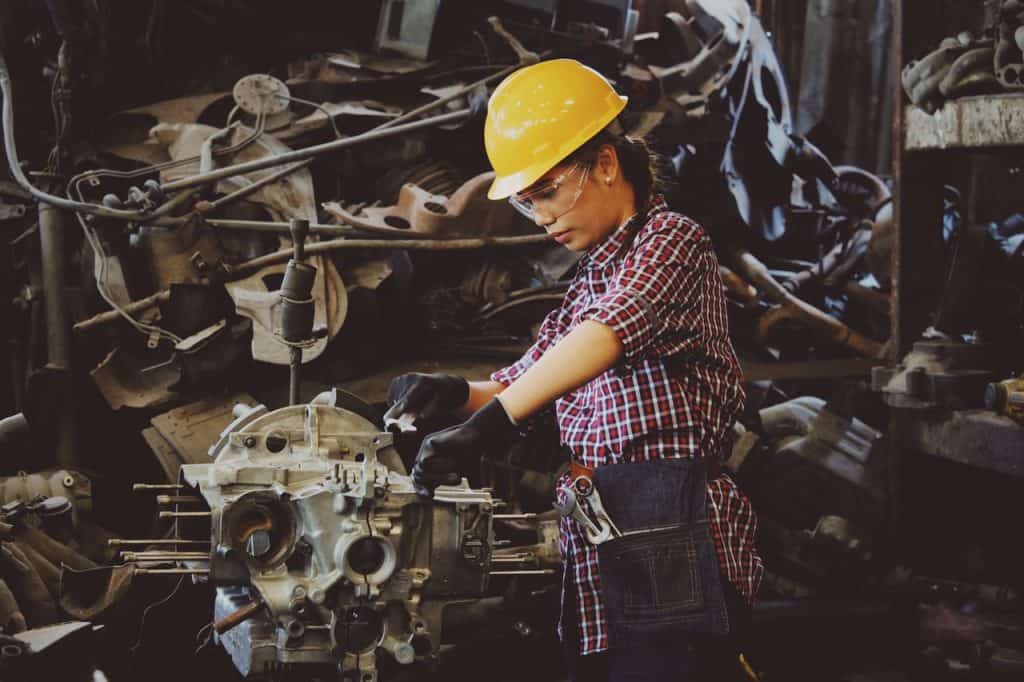
Metals and mineral products surround us everywhere - at home, on our commute to and from work and in our workplaces or factories.
They form the backbone of modern aircraft, automobiles, trains, ships, and infinite leisure vehicles; structures; implantable gadgets; cutlery and cookware; coinage and jewellery; weapons; and musical instruments. The uses are infinite.
While concerns abound from other material choices, metals continue to be at the forefront and are the sole choice for many industrial applications.
Today’s metallurgists’ focal points are developing new materials, new procedures to manufacture them, and testing new theories and models to explain them.
We have the means to measure qualities at the macro, micro, nano, and atomic scales, providing us unprecedented access to spark new advancements. The substantial dependency of our society on metals lends the profession of metallurgical engineering its ongoing prominence in the modern world.
Most feel that our economic and technical success into the 21st century will largely depend on additional advancements in metal and mineral technology.
For example, breakthroughs in energy technologies, such as the widespread usage of nuclear fusion, will only be achievable by material developments not yet in existence.
Thus, the future is undoubtedly bright for today’s material scientists and those engineers who picked metallurgy as their professional option.
Why Are There So Few Metallurgists?
Due in large part to the failure of the metallurgical community to express our position in engineering and manufacturing to management, metallurgy is not at the forefront of our educational system.
It would be ideal if metallurgists were involved in every facet of modern engineering, but in practise, this is rarely the case.
Since we always start our answers to questions with "it depends," it's no wonder that people have trouble understanding what we do.
Because of this, upper management has begun to suspect that our particular brand of engineering expertise can be easily replaced by that of competitors. When upper management doesn't get what we do, it's usually because they don't grasp the engineering life cycle or the interdependence of the various engineering specialisations.
Engineering Life Cycle
The metallurgist is the most qualified professional to answer two essential issues in the design of any engineering component:
What Must The Component Endure During Service (I.E., What Are The Product Requirements)?
It's important to consider issues like these: How challenging is the application, and how long does the design last?
Do you need the component part to last as long as possible, or does its design life suffice (i.e., will it break down for reasons other than its age)?
Where can I find information on the loads, lubricants, temperatures, and potential contaminants? In addition to price and features, what other product-specific service/performance factors are required?
How Will The Component Part Be Made (I.E., What Are The Process Requirements)?
It's important to consider issues like these: In what way will its fundamental shape be produced, and how, if at all, will it be heat-treated? Should we focus on incorporating particular mechanical properties?

Whether via mechanical or thermal techniques, of course. Do details like geometry and surface quality matter? Are unique finishes planned? Is there a problem with maintaining consistent dimensions (at room temperature or otherwise)? To what extent do other product-specific processing factors need to be accounted for?
Performance engineering, metallurgical engineering, and product/process engineering are obviously intertwined fields. They are extremely intertwined, and it is necessary to take into account all of these areas of study.
However, it is important to keep in mind that in order to meet logistical, supply chain, and inventory needs, it is often necessary to make concessions in material and manufacturing selection in order to meet today's price demands.
Lucky for us, that doesn't imply we should cut back on selection. On the contrary, it is possible to achieve great results while still keeping reasonable economic, manufacturing, and performance goals and catering to the demands of all parties involved.
When a product is still in the engineering phase of its development, a metallurgist's input is invaluable. Participation from a metallurgist in the development of a production process improves both its design and its capacity to provide the desired result.
This is the stage at which production first starts. This choice requires input from the so-called technological triangle. This means that the metallurgist or metallurgical engineering team should have a say in the following areas:
- Choice of Materials
- Approach to Production Planning
- Methodology advancement
- Choosing Appropriate Tools
- Growth Management
- Analyses of Variability
- Metrics for Evaluation
In addition to interacting with manufacturing to meet production demands, metallurgists and metallurgical engineers are accountable for doing so in an environmentally responsible manner through the development of processes and products that reduce waste, boost energy efficiency, boost performance, and make recycling easier.
A further contributor to the issue is the widespread lack of recognition accorded to metallurgists within the manufacturing sector. The days of every factory having a chief metallurgist and a team of metallurgists at their disposal are long gone.
Conclusion
For many reasons, metalworking has been an essential part of the economy for thousands of years. Educating the next generation in science, technology, engineering, and math (STEM) fields is one way to combat the shortage of people with bachelor's degrees or higher who are interested in working on R&D projects in the metallurgical industry. New materials are developed and their properties and structures are analysed so that informed design decisions can be made; this is the work of materials scientists. Metals, metal compounds, and metal alloys are the subject matter of metallurgy (alloys). The manufacturing of metals and the design of metal components for use in consumer and industrial goods rely on this branch of materials science and engineering.
Both chemical and physical metallurgy are important parts of the metallurgical field. Reduced and oxidised metals, mineral processing, metal extraction, thermodynamics, electrochemistry, and chemical deterioration are all areas of study within the field of chemical metallurgy. Crystallography, material characteriszation, mechanical metallurgy, phase transitions, and failure causes are all areas that fall under the purview of physical metallurgy. As part of the production process, metals are refined from their ores and then melted and mixed to create alloys. Of the metals used in the world, 95% are ferrous, but metallurgists also work with non-ferrous metals.
The mining industry, metal manufacturing, heat treatment, failure analysis, and metal joining are all common examples of more conventional applications. The extraction and purification of metals from their ores is known as extractive metallurgy. Numerous metals can coexist in the same ore body, making leaching an effective method for extracting them. Al, Cr, Cu, Fe, Mg, Ni, Ti, Zn, and Si are just some of the metals and metal alloys that find widespread use in engineering. Metallurgy is the science and technology of making useful objects out of metal.
The process begins with the development of the alloy and progresses through its shaping, heating, and finishing. It is common practise to measure the hardness of metal using the Rockwell, Vickers, and Brinell hardness scales in order to gain a better understanding of the metal's elasticity and plasticity for various applications and production processes. Metal scientists look for the optimal balance between a material's many desirable characteristics, such as its cost, weight, strength, toughness, hardness, corrosion resistance, fatigue life, and ability to perform in extreme temperatures. High purity single crystal silicon is required for fabrication of metal-oxide-silicon transistors (MOS) and integrated circuits, and single crystal alloys are used to prevent creeping under extreme heat. Because of the compromise between hardness and toughness in metals, tempering can reduce the metal's brittleness and increase its resistance to impact.
Chemically modifying surfaces with electroplating is one option, while shot peening, a cold working method, is used to prevent stress corrosion failures and fatigue. Scientists who specialise in materials now explore, design, and run factories that process raw materials into finished engineering products that improve people's lives. Metallurgy is the study of the physical and chemical properties of metals, intermetallic compounds, and alloys. Mineral extraction, extractive metallurgy, and physical metallurgy are the three main types of this process, and they all serve the same purpose: to produce metal components for use in consumer items and manufactured goods. The gap between the processing and thermodynamics and the structure and properties of metals can be bridged with the help of alloy design and microstructural engineering.
Metal products can be found in virtually every facet of modern life, including transportation (planes, cars, trains, ships, and an infinite variety of recreational vehicles), construction, in-body technology, kitchenware, currency, jewellery, and musical instruments. The ability to quantify properties at various length scales makes modern metallurgy an essential field. The metallurgical community's inability to effectively communicate its importance to the engineering and manufacturing sectors to upper management is largely to blame for the field's lack of prominence in our educational system. In the design of any engineering component, the metallurgist is the most knowledgeable person to address two central concerns: What are the service requirements for the part? When designing something, it's important to think about things like how difficult the application is and how long it will last.
Does the component part need to have a long service life, or will its designed lifespan suffice? In what places can I learn about the loads, lubricants, temperatures, and potential contaminants? How Will We Manufacture the Individual Part? How will its basic form be manufactured, and what kind of heat treatment, if any, will it undergo? Should The disciplines of performance engineering, metallurgical engineering, and product/process engineering are all interconnected, and all three must be taken into account when choosing materials and production methods.
A metallurgist's input during the engineering phase of product development is invaluable because it enhances both the design and the product's ability to produce the desired result. Metallurgists and metallurgical engineers are responsible for creating processes and products that facilitate recycling, reduce waste, increase energy efficiency, and improve performance. However, metallurgists are not widely appreciated in the manufacturing industry.
Content Summary
- In this article, we'll look at the industry's ongoing significance in modern society.
- Furthermore, it will describe some of the difficulties encountered in this dynamic field and suggest ways forwards.
- Metals like aluminium, copper, lead, zinc, and tin are discussed in this article due to their practical applications in the building and industrial sectors.
- Metallurgy is a crucial sector of the economy for several reasons.
- Insight into the significance of metal production and its role in facilitating other sectors is provided in this piece.
- In order to better grasp the significance of the metallurgical process, this blog post will examine some common metals and their applications within the metallurgical process.
- A metals expert, or "metallurgist," is a specialist in the field of metalworking.
- A component's resistance to fatigue failure, stress failure, corrosion failure, and cracking is increased by the compression stress introduced into the material's surface.
- Studying the physical and chemical properties of metals, intermetallic compounds, and alloys falls under the purview of metallurgy, which is a subfield of materials science and engineering.
- When upper management doesn't get what we do, it's usually because they don't grasp the engineering life cycle or the interdependence of the various engineering specialisations.
- The metallurgist is the most qualified professional to answer two essential issues in the design of any engineering component.
- Do details like geometry and surface quality matter?
- To what extent do other product-specific processing factors need to be accounted for?
- Performance engineering, metallurgical engineering, and product/process engineering are obviously intertwined fields.
- They are extremely intertwined, and it is necessary to take into account all of these areas of study.
- However, it is important to keep in mind that in order to meet logistical, supply chain, and inventory needs, it is often necessary to make concessions in material and manufacturing selection in order to meet today's price demands.
- When a product is still in the engineering phase of its development, a metallurgist's input is invaluable.
- Participation from a metallurgist in the development of a production process improves both its design and its capacity to provide the desired result.
- A further contributor to the issue is the widespread lack of recognition accorded to metallurgists within the manufacturing sector.
Frequently Asked Questions
Metallurgy concerning extraction of metal from ore or metal compounds is very important industry that supplies metallatic material with special properties for applications in many fields.
The ability of metals to alter the wealth, power, and culture of societies is so profound that the Bronze Age and the Iron Age label distinct eras in human development. Metallurgy makes the current Information Age possible and continues to shape our lives.
The world of metallurgy is an interesting one, if not an underappreciated one too. Metallurgy is the mixture of science and the applications it has on our society. It is used nearly everywhere without many people realizing how important it is.
Metallurgists and metallurgical engineers are also responsible for interfacing with manufacturing to meet production demands in an environmentally responsible way by designing processes and products that minimize waste, maximize energy efficiency, increase performance and facilitate recycling.