Welding, often seen as a mere technical skill or a necessary process in manufacturing and construction, holds an untold story of creativity and expression. In the blog titled "Is Welding Considered As Art?" we delve into the transformative journey of Welding from its industrial roots to its place in art.
This exploration challenges the conventional boundaries between functionality and beauty, inviting readers to reconsider Welding as a method of joining metals and a medium of artistic expression.
Through discussions on the intricacies of metalwork, the skill and imagination of welders, and the stunning creations that transcend the ordinary, this blog aims to illuminate the artistry hidden within sparks and steel. Join us as we uncover the fusion of strength and elegance, proving that Welding holds a rightful place in art.
Table of Contents
Welding In The Realm Of Art
Traditionally viewed as a systematic skill essential for construction and industrial fabrication, Welding has transcended its conventional boundaries to emerge as a vibrant medium of artistic expression. This transformation has enabled artists to explore the malleable nature of metal, crafting pieces that challenge the perception of Welding and redefine the essence of sculpture and art itself.
The innovative use of welding techniques marks the journey from utility to artistry, the selection of diverse materials, and the creative vision that drives artists to bring their imaginative concepts to life.
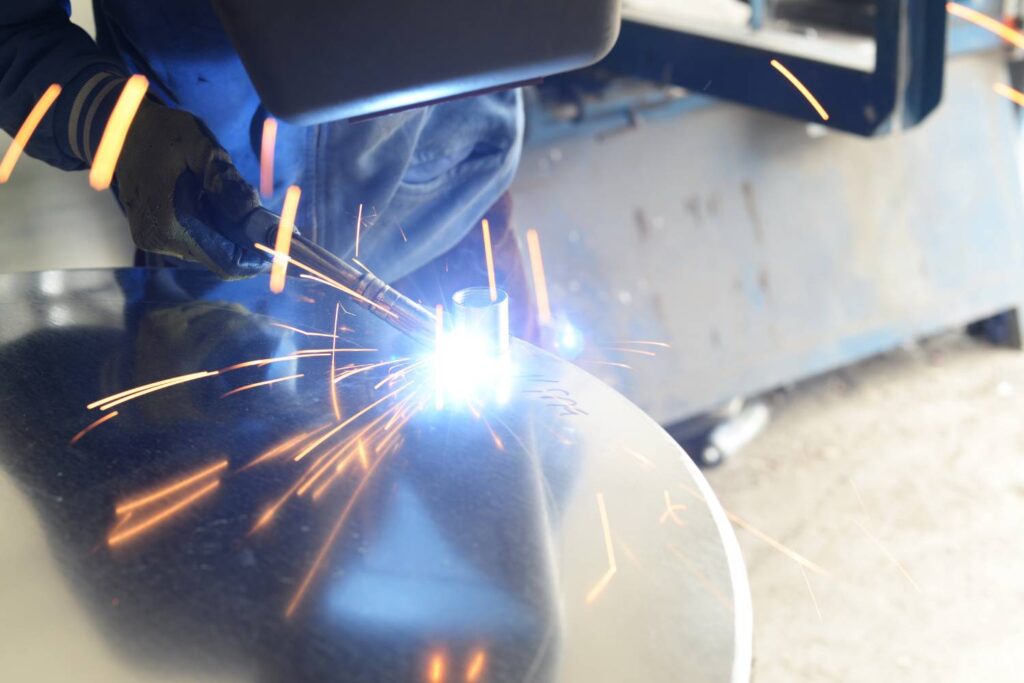
The Fusion Of Creativity And Metal
Artists have harnessed the power of Welding to create sculptures and pieces that blend aesthetic beauty with the inherent strength of metal. This unique artistry allows for the construction of intricate, large-scale works that can endure the elements and the passage of time. Public art installations and private collections alike showcase the versatility and durability of welded art, offering a testament to the creative potential of metal fusion.
Techniques And Materials
The art of Welding in sculpture utilizes various techniques, including MIG, TIG, and stick Welding, each chosen for its specific advantages and compatibility with different metals. Artists often work with materials like stainless steel, aluminium, bronze, and copper, each offering unique properties that influence the final appearance and character of the artwork. This selection process is crucial, as it determines the piece's structural integrity and aesthetic appeal.
Embracing Safety And Innovation
Safety remains paramount for welding artists, who must navigate the risks associated with molten metal and high temperatures. Adherence to safety guidelines and protective gear is essential to ensure the artist's well-being during the creative process.
Meanwhile, the evolution of welding technology continues to provide artists with new tools and methods, expanding the horizons of what can be achieved in welded art and sculpture.
Challenges And Opportunities
The intersection of technical skill and artistic vision presents challenges and opportunities for welding artists. Mastering the intricacies of welding while maintaining a focus on the creative aspect of the work requires a delicate balance. However, manipulating metal into complex, enduring structures offers unparalleled artistic freedom, opening new avenues for expression and innovation.
The Artistic Process In Welding
Welding, often perceived as a purely industrial activity, unfolds a rich tapestry of artistic expression when viewed through the lens of creativity and craftsmanship. This transformative process melds technical skill with imaginative vision, turning ordinary metal into extraordinary works of art. The journey from raw material to finished sculpture involves the melding of metals and the fusion of functionality with aesthetic beauty.
Fusion Of Metal And Creativity
At the heart of Welding lies the fusion of metal, a process that transcends its industrial origins to embrace the realm of art. As explored by Buckeye Fabricating,
Welding is more than the joining of metal pieces; it's a creative endeavour that strengthens the bond between individual elements, creating a whole that is stronger and more intricate than its parts.
This art form requires a deep understanding of various welding techniques, from shielded arc welding to TIG and MIG, each offering unique possibilities for artistic expression.
Crafting Significance And Essence
The Welding Academy highlights welding as a medium that extends beyond mechanical tasks, allowing skilled artisans to inject their vision into every creation. Whether it's a visually stunning metal sculpture or a piece with less aesthetic focus, the intention behind the work lends it significance. In this light, Welding becomes an artistic avenue for expressing meaning, showcasing the welder's ability to transform metal into expressions of aesthetic beauty and purpose.
Techniques Tailored For Art
The choice of welding technique is pivotal in the artistic process, as discussed on platforms like Quora. Each method, from MIG to TIG and stick welding, offers distinct advantages for creating art. MIG welding, for instance, is suited for complex assemblies, allowing for one-handed operation and versatility in metal types.
TIG welding, prized for its precision and control, is ideal for works with paramount appearance and structural integrity. Stick welding, adaptable to dirty metals and outdoor conditions, offers practical solutions for on-site installations and sculptures meant to withstand the elements.
The Intersection Of Art And Industry
Welding as an art form represents the intersection of industrial strength and artistic fidelity. It showcases the welder's mastery over material and technique, transforming the act of Welding into a dance of creation. The process is a metaphor for civilization's progress and a tangible expression of individual creativity.
Through the sparks of the welder's torch, metal is reborn into forms that captivate the imagination, challenge perceptions of medium and craft, and solidify the bond between the functional and the beautiful.
Challenges And Perceptions
Welding, a critical process in various industries, presents unique challenges and perceptions among practitioners, particularly apprentices and students. This exploration synthesizes insights from multiple sources, highlighting the hurdles and viewpoints within the welding community.
Educational And Training Challenges
Shielded Metal Arc Welding (SMAW) students face significant challenges in mastering the process due to its complexity and hazardous welding activities. Exposure to photobiological hazards and health risks necessitates comprehensive preparation before Welding. Innovative approaches, such as mobile apps and expert systems, have been proposed to enhance learning experiences and prepare students more effectively for welding activities.
A study highlighted in academia.edu discusses the development of instructional methods in professional education for welders. It found that combining oral and written briefings significantly improves the learning outcomes of welding students, underscoring the importance of diverse instructional strategies to address the learning needs of welding apprentices.
Skills Mastery And Safety Practices
The research documented on Scribd emphasizes that Welding requires mastery of technical skills, such as operating equipment and adherence to safety practices. The study aimed to evaluate the SMAW skills of 12th-grade students, focusing on their ability to follow directions, safety practices, and task completion. It was noted that Gas Metal Arc Welding (GMAW) is perceived as more accessible for students than SMAW, suggesting a need for targeted feedback and improvements in welding programs.
Perception Of Risks Among Apprentice Welders
A study on ResearchGate delves into the perceptions of apprentice welders regarding physical, chemical, biological, and physiological risks. Most apprentices recognized the physical and chemical risks, with a significant number also acknowledging physiological and, to a lesser extent, biological risks.
The most frequently identified risk factor was the heat generated during welding activities. This highlights the critical need for risk communication and education to enhance apprentice welders' safety and health awareness.
Celebrating Welded Art
Welded art, a remarkable fusion of technical skill and creative vision, transforms the rigid nature of metal into expressive and dynamic works of art. This unique form of artistic expression showcases the versatility of Welding as a craft and highlights the boundless imagination of artists who see beyond the material's industrial origins.
The Journey From Craft To Art
Traditionally viewed through the lens of its practical applications in construction and manufacturing, Welding has evolved into a medium for artistic exploration. Artists adept in Welding have pushed this craft's boundaries, turning scrap metal and industrial remnants into intricate sculptures, decorative pieces, and even functional art. These creations range from majestic and lifelike representations of wildlife to abstract forms that challenge our perceptions of space and form.
Milestones In Welding Artistry
The journey of a welding artist is marked by several milestones, from the first spark of the welder to the completion of complex projects that stand as testaments to their skill and creativity. Each bead laid, each piece shaped, and each sculpture completed represents a step forward in the artist's quest for expression. They celebrate these achievements, whether personal breakthroughs or recognized accolades, which is essential for the growth and recognition of welding art.
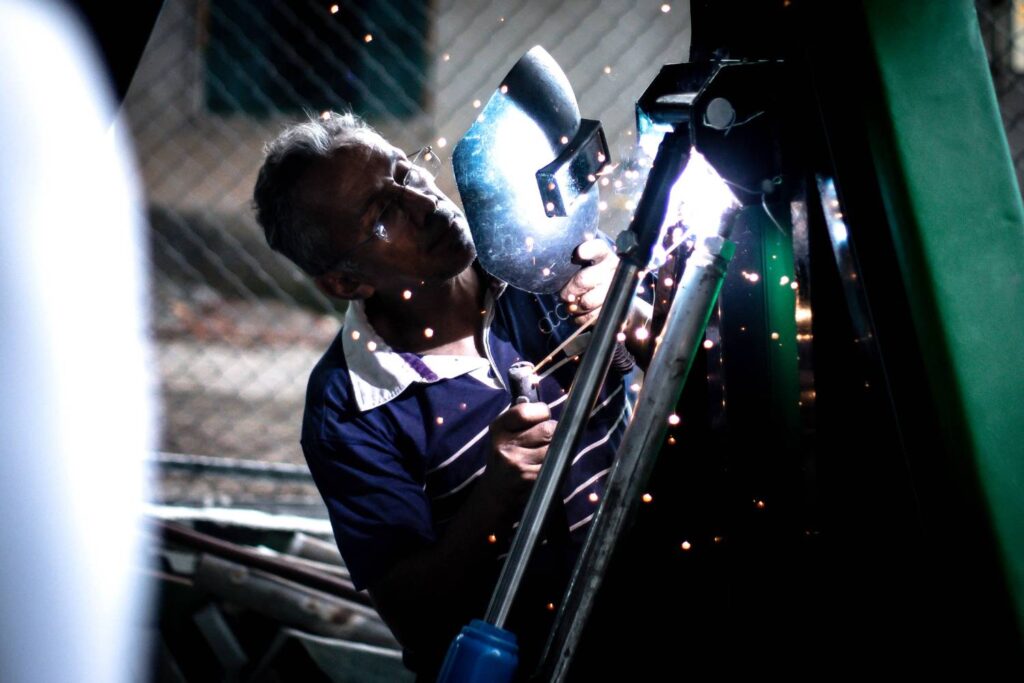
The Spectrum Of Welded Creations
Welded art encompasses many creations, each reflecting the artist's style and the diverse potential of metal as a medium. From the delicate balance and form of a stainless steel holiday tree to the rugged beauty of rustic metal sculptures, the spectrum of welded art is as varied as the artists themselves. These pieces adorn homes and galleries and serve as focal points in public spaces, inviting onlookers to appreciate the craftsmanship and thought woven into each work.
Embracing The Artistic Process
Creating welded art is both a technical challenge and a creative journey. Artists must navigate the intricacies of welding equipment and techniques while giving life to their artistic visions. This dual demand of precision and imagination makes welded art so fascinating. It is a testament to the artist's ability to transform a cold, hard material into something that resonates with warmth and emotion.
The Future Of Welded Art
As welded art continues to gain recognition and appreciation, it paves the way for future artists to explore and experiment with metal in new and innovative ways. The community of welding artists grows, driven by a shared passion for the craft and an unyielding desire to push the boundaries of what can be achieved with metal and fire. Celebrating welded art is about acknowledging the beauty and complexity of the pieces created and recognizing the artists' dedication, skill, and creativity behind them.
Conclusion
Welding, often seen as a technical skill, has evolved from its industrial roots to a vibrant medium of artistic expression. This transformation has allowed artists to explore the malleable nature of metal, crafting pieces that challenge the perception of Welding and redefine the essence of sculpture and art. The fusion of creativity and metal allows for constructing intricate, large-scale works that can endure elements and the passage of time.
The art of Welding in sculpture utilizes various techniques, including MIG, TIG, and stick Welding, each chosen for its specific advantages and compatibility with different metals. Safety and innovation are paramount concerns for welding artists, who must navigate the risks of molten metal and high temperatures. The intersection of technical skill and artistic vision presents challenges and opportunities for welding artists.
The artistic process in Welding involves the melding of metals and the fusion of functionality with aesthetic beauty. The Welding Academy highlights welding as a medium that extends beyond mechanical tasks, allowing skilled artisans to inject their vision into every creation. Each method, from MIG to TIG and stick welding, offers distinct advantages for creating art.
In conclusion, Welding holds a rightful place in art, blending strength and elegance and presenting challenges and opportunities for artists.
Welding is a unique art form that combines industrial strength and artistic fidelity, transforming the act of Welding into a dance of creation. It is a metaphor for civilization's progress and a tangible expression of individual creativity. Welding presents unique challenges and perceptions among practitioners, particularly apprentices and students.
Educational and training challenges are significant, with students exposed to photobiological hazards and health risks. Innovative approaches, such as mobile apps and expert systems, have been proposed to enhance learning experiences.
Research on Scribd emphasizes the importance of combining oral and written briefings in professional education for welders. Gas Metal Arc Welding (GMAW) is perceived as more accessible for students than SMAW, suggesting a need for targeted feedback and improvements in welding programs. Apprentice welders' perceptions of risks are also critical, with the most frequently identified risk factor being heat generated during welding activities.
Welded art, a fusion of technical skill and creative vision, transforms the rigid nature of metal into expressive and dynamic works of art. Artists have pushed the boundaries of Welding, turning scrap metal and industrial remnants into intricate sculptures, decorative pieces, and functional art.
Celebrating the artistic process is essential for the growth and recognition of welding art. The future of welding art is driven by a shared passion for the craft and an unyielding desire to push the boundaries of what can be achieved with metal and fire.
Content Summary
- Welding transcends its industrial roots, emerging as a vibrant medium of artistic expression.
- It challenges the conventional boundaries between functionality and beauty.
- Welding is a method of joining metals and a medium of artistic expression.
- The blog explores the artistry hidden within sparks and steel.
- Welding in art allows for creating sculptures that blend aesthetic beauty with metal's inherent strength.
- Public art installations showcase the versatility and durability of welded art.
- Various welding techniques and materials are chosen for their specific advantages in art.
- Safety and innovation are paramount in the realm of welding art.
- The fusion of creativity and metal results in intricate, enduring works.
- Welding artists face challenges in balancing technical skills with creative vision.
- The artistic process in welding melds technical skills with imaginative vision.
- Techniques like MIG, TIG, and stick welding are tailored for artistic expression.
- The choice of welding technique is pivotal in the artistic process.
- Welding as an art form represents the intersection of industrial strength and artistic finesse.
- Educational challenges include mastering complex welding processes and safety practices.
- The perception of risks among apprentice welders highlights the need for safety and health awareness.
- Celebrating welded art showcases the versatility and imagination of artists.
- Milestones in welding artistry mark the growth and recognition of Welding as an art form.
- The spectrum of welded creations is as varied as the artists themselves.
- Creating welded art is a testament to the artist's ability to transform metal.
- The future of welded art encourages exploration and experimentation with metal.
- Welding art challenges perceptions and redefines sculpture and art itself.
- Artists use Welding to craft pieces that endure elements and time.
- MIG, TIG, and stick welding techniques are utilized for their compatibility with different metals.
- Safety guidelines and protective gear ensure the well-being of welding artists.
- Welding technology provides new tools and methods for artists.
- Mastering welding intricacies while focusing on creative work requires balance.
- The ability to manipulate metal into structures offers artistic freedom.
- Welding's industrial activity unfolds a rich tapestry of artistic expression.
- The fusion of metal in Welding embraces the realm of art.
- Skilled artisans inject their vision into every creation, making welding an artistic avenue.
- MIG welding is suited for complex assemblies, offering versatility.
- TIG welding is ideal for works where appearance and structural integrity are paramount.
- Stick Welding offers practical solutions for on-site installations and sculptures.
- Welding presents unique challenges and perceptions among practitioners.
- SMAW students face challenges due to the complexity and hazards of Welding.
- Combining oral and written briefings improves welding students' learning outcomes.
- GMAW is perceived as more accessible for students, suggesting a need for improvements in welding programs.
- Apprentice welders' perception of risks underscores the importance of risk communication.
- The journey from craft to art in Welding has evolved, turning scrap metal into intricate sculptures.
- Celebrating achievements in welding art is essential for artists' growth.
- The artistic process in Welding is a creative journey, navigating the intricacies of equipment and techniques.
- A shared passion for the craft drives the community of welding artists.
- The blog invites readers to reconsider Welding as an artistic medium.
- It aims to illuminate the artistry hidden within the welding process.
- Discussions on metalwork, skill, and imagination of welders are featured.
- The blog uncovers the fusion of strength and elegance in welded art.
- It proves that Welding holds a rightful place in the realm of art.
- The exploration challenges conventional boundaries between industrial functionality and artistic beauty.
- Welding's transformative journey from industrial use to artistic expression is highlighted.
Frequently Asked Questions
Welding art refers to the creative process of using welding techniques to construct sculptures, installations, or decorative pieces from metal. It transcends traditional Welding's industrial applications, showcasing the welder's skill and creativity in transforming metal into artistic expressions.
Yes, Welding is increasingly recognized as a form of art. Welding art involves creativity, expression, and technique like any other art form. Welding artists use their understanding of metals and welding processes to create structurally sound and aesthetically pleasing pieces.
Depending on their working materials and desired effects, artists may use various welding techniques, including MIG (Metal Inert Gas), TIG (Tungsten Inert Gas), and stick welding. Each technique offers different advantages for artistic expression.
Welding art can be created from various metals, including steel, stainless steel, copper, bronze, and aluminium. Artists often repurpose scrap metal, giving new life to materials that would otherwise be discarded.
Yes, there are many renowned welding artists around the world. Some notable names include Alexander Calder, known for his mobiles and stabiles, and Richard Serra, famous for his large-scale steel sculptures. Their work demonstrates the potential of Welding as a medium for artistic expression.