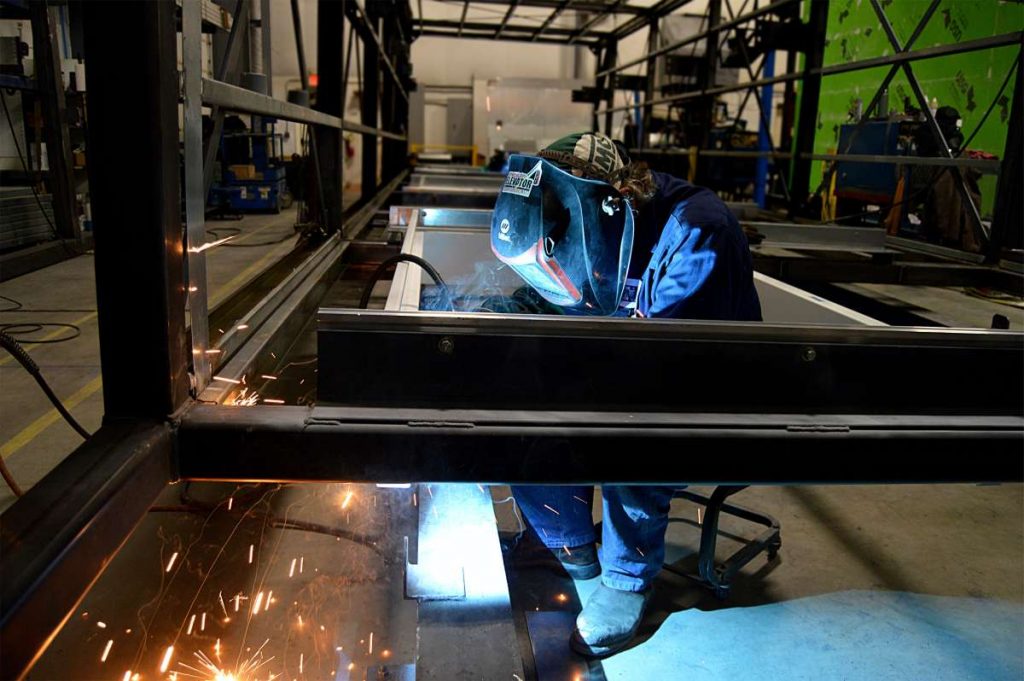
MIG (GMAW) welding with shielding gas and a solid wire electrode produces a clean, slag-free weld, in contrast to Stick welding, which must be stopped frequently to replace the electrode. Potential benefits of this approach include quicker turnaround times and less mess.
Check Out Melbourne's Top Metal Fabrication Services - Austgen
Shielding gas can improve or hinder welding performance, depending on the circumstances.
Accomplishing these objectives requires an understanding of the role of shielding gas, the different types of shielding gas, and the characteristics of each.
The primary function of shielding gas is to prevent atmospheric oxygen, nitrogen, and hydrogen from reacting with the molten weld pool. Reactions between these substances and the weld pool can cause a wide variety of issues, including porosity (holes in the weld bead) and excessive spatter.
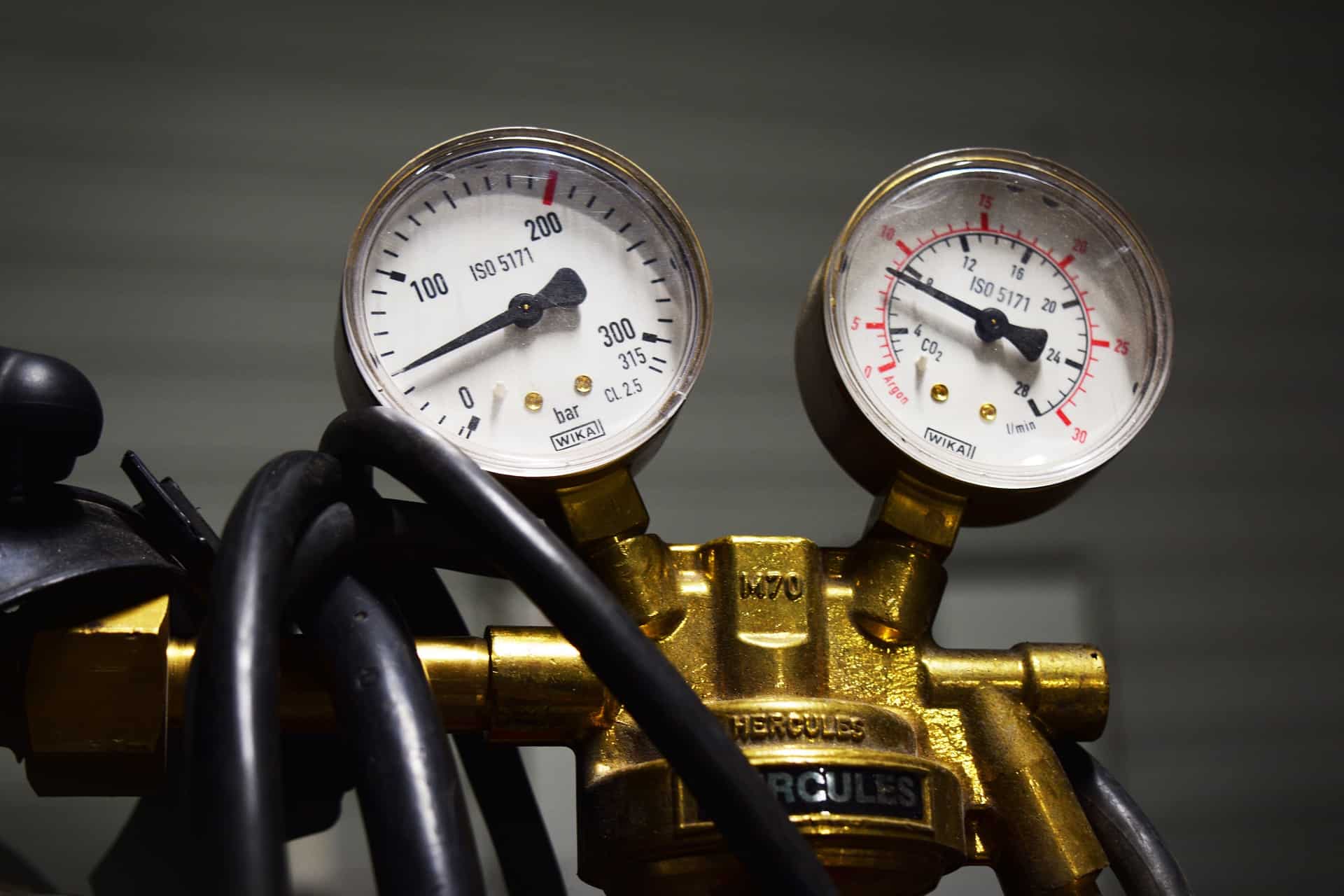
The transfer process, the mechanical qualities of the finished weld, the arc stability, and many other factors are all significantly affected by the shielding gas.
The use of consumables for the MIG gun that reliably and smoothly supply the shielding gas is essential for producing high-quality MIG welds.
Table of Contents
What Are the Different Types of Gases Used in Welding?
Inert and Reactive Gases
Gases can be either inert or reactive, and both categories exist. Inert gases don't change at all when put in contact with other substances or temperatures. In contrast, reactive gases are the complete opposite. When placed in a particular circumstance, they react by altering their own and/or the surrounding substances' states.
Welding with inert gases is advantageous because it eliminates the possibility of the weld failing or distorting due to outside influences. Improved material fusion is achieved through the use of reactive gases introduced into the welding process.
Shielding Gas
When air gets into the welding arc, it causes bubbles in the molten metal. A weak and unattractive weld is the result. For MIG or TIG welding, without a shielding gas, you can only use filler material that is either flux-cored or flux-coated. This works similarly to a shielding gas in that it prevents harmful substances from entering.
For the most part, inert shielding gases are the best option for keeping welders safe from flying sparks and spatter. They can also make the weld easier to smooth out afterwards by increasing its fluidity while molten and making it more penetrable, depending on the gas used.
Purging Gas
Instead of using a shielding gas during the welding process, a purging gas is used to cover the bottom of the material being welded.
While welding the top of the joint, the bottom is sealed off and purged with gas to prevent leaks. It is common practise to use a different gas below the joint than above it when working with stainless steel, but both gases can be used.
Heating Gas
Gas is used to heat the filler rods or metal in brazing and gas welding. This eliminates the need to employ an arc.
When welding certain metals, this gas is used to preheat the material. This gas is nothing more than a fuel that has been ignited in the presence of air or oxygen in order to heat or melt the metal.
Blanketing Gas
Blanketing is the process of purging air and other contaminants from finished tanks and other sealed spaces by filling them with gas.
Sometimes it's used to stuff everything possible into a final product. To avoid the formation of other gases or reactions, the gas is sometimes mixed with air already present in the tank.
Why Is It Important to Choose the Right Gas?
There are a wide variety of shielding gases that can be used for MIG welding, each with its own set of benefits and drawbacks depending on the welding project at hand. You should think about the base material, the weld transfer process, the desired level of productivity, the cost of the gas, the qualities of the finished weld, the preparation required, and the cleanup required after the weld when selecting a shielding gas.
Each of the four most common shielding gases used in MIG welding—argon, helium, carbon dioxide, and oxygen—has its own set of benefits and drawbacks.
Porosity, which appears as holes in the exterior and interior of the weld bead, is caused by insufficient shielding gas.
While carbon dioxide (CO2) is the most widely used reactive gas for MIG welding, it must be mixed with an inert gas for most applications. In situations where minimising production costs is of the utmost importance, CO2 is a good choice because it is the most cost-effective of the common shielding gases. While pure carbon dioxide (CO2) permits very deep weld penetration—ideal for welding thick material—it also creates a less stable arc and more spatters than when it is blended with other gases. Only the short circuit technique can make use of this.
Many companies, especially those that place a high value on weld quality, appearance, and minimising post-weld clean up, find that a mixture of 75–95 percent Argon and 5–25 percent CO2 provides a more desirable combination of arc stability, puddle control, and less spatter than pure CO2. This blend enables spray transfer welding, which can boost productivity while also enhancing aesthetics. Argon has a lower penetration profile, which is useful for fillet and butt welds. Pure Argon is required for welding aluminium, magnesium, or titanium.
Oxygen is commonly used at proportions of nine percent or less to improve the fluidity, penetration, and arc stability of weld pools in mild carbon, low alloy, and stainless steel. Because it oxidises the weld metal, it is not recommended for use with aluminium, magnesium, copper, or any other rare metals.
While pure Argon is typically used with non-ferrous metals, helium is also widely used with these and stainless steels. Helium is commonly mixed at a ratio of 25–75 percent Helium to 75–25 percent Argon due to its wide and deep penetration profile, making it a good choice for use with thick materials. The rate at which the beads travel, their shape, and the depth to which they penetrate can all be altered by adjusting these factors. Thanks to the "hotter" arc produced by helium, faster travel speeds and greater productivity are possible. As it is more costly and necessitates a higher flow rate than Argon, you will need to determine whether the benefits of increased productivity are worth the additional outlay. Helium is typically used in conjunction with argon and carbon monoxide in a tri-mix formula when working with stainless steel.
With this illustration, you can observe how consumables reduce the amount of shielding gas available. To the left, the shielding gas is well-enclosed, while to the right, it has been compromised by air.
Is It Ok to Place the Gas in the Weld Pool?
All of your time spent picking the right gas for shielding the weld will be for nought if the equipment you use to get it there is inadequate. Protecting the weld pool from the surrounding air is an important part of the MIG welding process, and the consumables of the gun—a diffuser, contact tip, and nozzle—are what make this possible.
It is possible that not enough shielding gas is reaching the weld pool because of factors such as an insufficiently large nozzle or a diffuser that has become clogged with spatter. A poorly made diffuser may also fail to properly direct the flow of the shielding gas, resulting in an unstable, unbalanced stream of gas. Due to the presence of pockets of air, spatter porosity and weld contamination are both greatly increased in both of these scenarios.
Through this analysis of a disposable system, we can see the splatter guard within the nozzle that serves to anchor the contact tip within the diffuser. The nozzle bore of your MIG gun consumables should be large enough to evenly distribute shielding gas and prevent spattering. A more consistent and uniform flow of shielding gas is achieved by the splatter guards built into the nozzles sold by some manufacturers.
When deciding on the best shielding gas, it is important to think about the welding process and the order of operational priorities. The aforementioned tips will get your welding education off to a good start, but before you make any concrete plans, it's a good idea to consult with a welding supply store in your area.
Carbon dioxide is frequently used as a shielding gas when gas metal arc (GMA) welding carbon steels. Some metals' metallurgical properties can be diminished by the oxidation that occurs during welding. However, the presence of oxygen actually aids in the production of some desirable weld features when working with carbon steels. Even with carbon dioxide shielding, welding carbon steels may prevent you from achieving the best possible results. Weld quality and strength can be enhanced by combining carbon dioxide with another gas (such as Argon) to increase arc stability, weld pool fluidity, etc.
When compared to modern MIG and TIG welders, traditional stick welders knew very little about gases.
How far we've come in such a short time since the introduction of the most popular gases and mixtures used in the welding industry is truly remarkable. Progress has been tremendous, and the prospect of using existing gases in novel ways is exciting.
Check out Austgens DESIGN CAD/CAM
What Is the Purpose of Gas in Welding?
It's easy to see why gas is so useful in so many contexts. Purging or cleaning the underside of the seam opposite the arc is necessary to prevent air, dust, and gas contamination of the arc. Once welding is complete, blanketing gases are used to further safeguard the metals.
What Are the Reasons for Using Carbon Dioxide in Welding?
When gas metal arc welding carbon steels, here are some of the strongest arguments in favour of using carbon dioxide shielding.
Improved Penetration
By increasing the arc voltage, which is made easier by carbon dioxide shielding, we can better penetrate the weld joint. This technique allows for effective root and sidewall penetration.
Cost-Benefit
It's a cheap alternative to other shielding gases, so it's a good bet in many situations. Due to the inert nature of carbon dioxide towards oxygen, the weld metal will be shielded from oxidation during this time. Its heavier weight is directly proportional to the enhanced security it provides. Weld quality is lower than with Argon or Helium, but it's a lot cheaper.
Add-on Oxidizing
The high-temperature arc converts carbon dioxide to carbon monoxide and oxygen, accelerating the oxidation process. Slight oxidising may prove an adjunct to GMA welding of carbon steels, as the creation of polar spots can lead to unstable arc and spatter during welding. During spray transfer mode, the polarity is reversed by connecting an electrode to the positive (anode) terminal of the power source and the negative (cathode) terminal of the workpiece.
Owing to oxidation, a dark, glassy slag forms in the weldment, and the silicon content of consumable deoxidizers can be reduced. Managing the oxidation process effectively can significantly enhance weld penetration and bead definition. Contrarily, carbon dioxide has the potential to remove any impurity on a joint, which aids in fluxing and helps avoid porosity.
Combination With Other Gases
Spray transfer modes using only carbon dioxide do not yield better performance and may even cause severe spatter. Gases can mutually benefit from forming an alliance. For instance, using inert gases (such as Argon) to facilitate smooth spray transfer at low voltage settings can help solve problems like spattering and arc instability.
Prevention of Undercut
Carbon dioxide's density makes it an effective sound barrier, which has been demonstrated experimentally. The ability to prevent major weld flaws like undercut, which results in beads with a superior profile.
Check out Custom Metal Equipment Design and Production
Safety
Unfortunately, carbon dioxide shielding raises concerns about safety. Carbon monoxide is less lethal than other workplace hazards, but its threatening behaviour could still be disastrous. There should be sufficient ventilation in the workplace to lessen the possibility of injury during procedures.
Removal of Rust
Using this gas can assist in the removal of rust from a joint. Rust and other pollutants can be cleaned up through a chemical reaction with rust oxides. Avoiding common welding flaws like porosity, poor fusion, and insufficient penetration into the weld metal is a plus, and so is the added benefit of being protected from the elements.
Improvement in Toughness
To create the required toughness in weld metals, a welding technique must take into account the correct gas composition and acceptable consumables. The addition of carbon dioxide and other gases can improve the strength of welds.
Reduction of Surface tension
Due to their high surface tension, carbon steels are more difficult to penetrate. Inert gases such as helium, argon, etc. are unable to lower the high surface tension that develops in the molten weld. Carbon dioxide, on the other hand, is the only shielding gas known to reduce surface tension and improve penetration outcomes. As a result, carbon steels tend to have lower concentrations of carbon dioxide.
A weld is created by heating the base metal and the filler metal with a gas-fed flame torch. The gas is typically mixed with oxygen to create a bright white flame. Because different gases can be used as fuel and the welding machine doesn't need to be plugged into an electrical outlet, gas welding is a fabrication method that is both flexible and mobile. All types of gas welding require the use of protective gear for the welder and locked containers for the welding gases.
Oxy-Acetylene Welding
During oxy-acetylene welding, a mixture of acetylene gas and oxygen gas is used to power the welding torch. Oxy-acetylene welding is the most common kind of gas welding. This gas combination produces the highest flame temperature of any fuel gas combination. Unfortunately, acetylene is the most costly fuel gas in general. Acetylene is a highly combustible gas that requires special handling and storage procedures.
Oxy-Gasoline Welding
When acetylene canisters are too expensive, welders will sometimes use pressurised gasoline instead. It's possible that gasoline torches are better suited for torch cutting thick steel plates than acetylene torches. People who sell jewellery in economically depressed areas may have to pump gasoline by hand from a pressurised cylinder.
MAPP Gas Welding
Because it is significantly less reactive than other gas mixes, MAPP (methylacetylene-propadiene-petroleum) is better suited for use and storage by amateur welders. Sawing on a massive industrial scale is a natural application for MAPP because of its suitability for use at very high pressures.
Butane/Propane Welding
It is possible to use butane and propane separately as fuel gases, and they can also be used together. Even though butane and propane burn at lower temperatures than acetylene, they are more cost-effective and easier to transport. Propane torches are commonly used for a variety of tasks, including soldering, bending, and heating. Propane is heavier than air, so a different torch tip than an injector tip is required when working with it.
Check out How to Weld Aluminum – Metal Fabrication
Hydrogen Welding
Hydrogen is superior to other fuel gases in underwater welding applications due to its ability to be used at higher pressures. Electrolysis can be used to split water into hydrogen and oxygen, which can then be used in hydrogen welding machinery. Electrolysis is commonly used to create small torches, like those used in the jewellery industry.
How to Weld With Mapp Gas?
By combining LPG and methylacetylene-propadiene, Dow Chemical Company created a gas blend known as MAPP. Because it can be compressed and stored in the same ways that LPG can, MAPP gas is gaining popularity among do-it-yourself welders. In contrast to oxy-acetylene, the flame produced by MAPP torches is nearly as hot, and the gas can be used for industrial metal cutting. MAPP shouldn't be used for welding steel due to the hydrogen in the gas mixture potentially resulting in brittle welds.
Ensure proper alignment and a snug fit between the welding targets. Light the torch and adjust the flame to the perfect level. Some MAPP torches can run on just air, while others need an oxygen tank as well. Use the flame to touch the pieces and move in small circles to melt the material at the weld zone.
You need to move the torch forwards to move the pool of molten metal forwards, and you need to use the filler rod to add more material to the weld as needed. The base metal should melt like solder when the filler rod is touched to the workpiece.
You should keep welding until you reach the end. As the workpiece heats up, slow down the welding speed to avoid burning the material. It's important to wait for the weld to cool down after you're done working on it.
Is It Safe Using Gas?
When welding, many different gases are used, each of which has its own unique set of dangers due to its chemical make-up. The majority of welding gases are inert, but acetylene and other flammable gases require special attention in a welding shop.
When the welding equipment is not in use, make sure that the area is free of any flammable gases. You should always have a class B fire extinguisher nearby when working with them. Without further instruction, a class B extinguisher will be filled with carbon dioxide or a dry chemical.
Welding in a confined space for too long with inert gases can cause asphyxiation, despite the fact that these gases are safe to work with because they are not combustible and don't react with other substances. Before you begin welding in a confined space, make sure you've taken all precautions. You can reduce your exposure by using safety gear like gas detectors, extractor fans, and a welding spotter, as well as by taking frequent breaks.
Conclusion
In contrast to Stick welding, which must be stopped frequently to replace the electrode, MIG (GMAW) welding with shielding gas and a solid wire electrode produces a clean, slag-free weld. Producing high-quality MIG welds requires the use of consumables for the MIG gun that reliably and smoothly supply the shielding gas. Welding utilises both inert and reactive shielding gases. When it comes to protecting welders from sparks and spatter, inert shielding gases are the way to go. On the other hand, reactive gases can make the weld easier to smooth out afterwards by increasing its fluidity while molten and making it more penetrable.
MIG welding necessitates gas purging to prevent leaks, which is accomplished by sealing off the bottom of the joint. For MIG welding, you can choose from a number of different shielding gases, each of which has its own advantages and disadvantages. Argon, helium, carbon dioxide, and oxygen are the big four shielding gases for MIG welding. The most common reactive gas is carbon dioxide (CO2), which is typically used in conjunction with an inert gas. While carbon dioxide (CO2) is the most budget-friendly common shielding gas, it also produces the least stable arc and the most spatters when used alone.
Pure Argon is not recommended for use with aluminium, magnesium, copper, or any other rare metals, and a mixture of 75-95% Argon and 5-25% CO2 provides a more desirable combination of arc stability, puddle control, and less spatter than pure CO2. Weld pools made of mild carbon, low alloy, or stainless steel benefit greatly from the addition of oxygen at concentrations of nine percent or less to increase their fluidity, penetration, and arc stability. Because of its broad and deep penetration profile, Helium is often mixed with Argon at a ratio of 25–75% Helium to 75–25% Argon, making it an excellent choice for use with thick materials. This is made possible by the gun's consumables, which include a diffuser, contact tip, and nozzle.
Thinking about the welding procedure and the order of operational priorities can help you choose the best shielding gas. When gas metal arc (GMA) welding carbon steels, carbon dioxide is commonly used as a shielding gas; however, this can increase spatter porosity and weld contamination. Some manufacturers include splatter guards in their nozzles, and the nozzle bore of MIG gun consumables should be large enough to evenly distribute shielding gas and prevent spattering. You should check with a local welding supply shop before finalising any plans. For gas metal arc welding of carbon steels, carbon dioxide shielding is a cost-effective alternative to other shielding gases, allowing for better penetration, cost-benefit, and protection from oxidation.
It blocks out noise well and stops major weld flaws like undercut from happening. Problems like spattering and arc instability can be mitigated by combining with other gases. While the use of carbon dioxide shielding has safety implications, there are benefits to doing so, including the elimination of rust and other pollutants, the lessening of surface tension, and the increase in toughness of the weld metal. With this method, a gas-fed flame torch is used to heat the base metal and filler metal, resulting in a weld. The most common type of gas welding is oxy-acetylene welding, but acetylene is the most expensive fuel gas and must be stored in a very specific way.
Amateur welders can benefit from using MAPP (methylacetylene-propadiene-petroleum), a gas blend that is easier to store and handle. Because it can be used at higher pressures, it outperforms other fuel gases when it comes to underwater welding. It is possible to use hydrogen welding equipment by electrolyzing water to separate the hydrogen and oxygen. Steel should never be welded using MAPP because the hydrogen in the gas mixture can cause brittle welds. When welding, you advance the torch and use the filler rod to add more metal to the joint.
When the filler rod is touched to the workpiece, the base metal should melt like solder; welding speeds should be reduced to prevent burning. It's best to let the weld cool down before touching it again. Inert gases can be used without worry, but flammable gases like acetylene need to be handled with care. Use protective equipment like gas detectors, extractor fans, and a welding spotter, and take frequent breaks to lower your risk of exposure.
Content Summary
- MIG (GMAW) welding with shielding gas and a solid wire electrode produces a clean, slag-free weld, in contrast to Stick welding, which must be stopped frequently to replace the electrode.
- Shielding gas can improve or hinder welding performance, depending on the circumstances.
- Accomplishing these objectives requires an understanding of the role of shielding gas, the different types of shielding gas, and the characteristics of each.
- The use of consumables for the MIG gun that reliably and smoothly supply the shielding gas is essential for producing high-quality MIG welds.
- Improved material fusion is achieved through the use of reactive gases introduced into the welding process.
- While welding the top of the joint, the bottom is sealed off and purged with gas to prevent leaks.
- There are a wide variety of shielding gases that can be used for MIG welding, each with its own set of benefits and drawbacks depending on the welding project at hand.
- Each of the four most common shielding gases used in MIG welding—argon, helium, carbon dioxide, and oxygen—has its own set of benefits and drawbacks.
- While carbon dioxide (CO2) is the most widely used reactive gas for MIG welding, it must be mixed with an inert gas for most applications.
- Only the short circuit technique can make use of this.
- Many companies, especially those that place a high value on weld quality, appearance, and minimising post-weld clean up, find that a mixture of 75–95 percent Argon and 5–25 percent CO2 provides a more desirable combination of arc stability, puddle control, and less spatter than pure CO2.
- Pure Argon is required for welding aluminium, magnesium, or titanium.
- All of your time spent picking the right gas for shielding the weld will be for nought if the equipment you use to get it there is inadequate.
- Protecting the weld pool from the surrounding air is an important part of the MIG welding process, and the consumables of the gun—a diffuser, contact tip, and nozzle—are what make this possible.
- It is possible that not enough shielding gas is reaching the weld pool because of factors such as an insufficiently large nozzle or a diffuser that has become clogged with spatter.
- The nozzle bore of your MIG gun consumables should be large enough to evenly distribute shielding gas and prevent spattering.
- When deciding on the best shielding gas, it is important to think about the welding process and the order of operational priorities.
- The aforementioned tips will get your welding education off to a good start, but before you make any concrete plans, it's a good idea to consult with a welding supply store in your area.
- Carbon dioxide is frequently used as a shielding gas when gas metal arc (GMA) welding carbon steels.
- Even with carbon dioxide shielding, welding carbon steels may prevent you from achieving the best possible results.
- When gas metal arc welding carbon steels, here are some of the strongest arguments in favour of using carbon dioxide shielding.
- By increasing the arc voltage, which is made easier by carbon dioxide shielding, we can better penetrate the weld joint.
- It's a cheap alternative to other shielding gases, so it's a good bet in many situations.
- Due to the inert nature of carbon dioxide towards oxygen, the weld metal will be shielded from oxidation during this time.
- Unfortunately, carbon dioxide shielding raises concerns about safety.
- The addition of carbon dioxide and other gases can improve the strength of welds.
- Carbon dioxide, on the other hand, is the only shielding gas known to reduce surface tension and improve penetration outcomes.
- Oxy-acetylene welding is the most common kind of gas welding.
- It's possible that gasoline torches are better suited for torch cutting thick steel plates than acetylene torches.
- Because it is significantly less reactive than other gas mixes, MAPP (methylacetylene-propadiene-petroleum) is better suited for use and storage by amateur welders.
- In contrast to oxy-acetylene, the flame produced by MAPP torches is nearly as hot, and the gas can be used for industrial metal cutting.
- MAPP shouldn't be used for welding steel due to the hydrogen in the gas mixture potentially resulting in brittle welds.
- You need to move the torch forwards to move the pool of molten metal forwards, and you need to use the filler rod to add more material to the weld as needed.
- The base metal should melt like solder when the filler rod is touched to the workpiece.
- You should keep welding until you reach the end.
- The majority of welding gases are inert, but acetylene and other flammable gases require special attention in a welding shop.
- When the welding equipment is not in use, make sure that the area is free of any flammable gases.
- Before you begin welding in a confined space, make sure you've taken all precautions.
FAQs About Metal
Using carbon dioxide shielding instead of oxygen, will not allow oxidation in the weld metal, as oxygen does. Being heavier, it provides better shielding characteristics. Though it is cheaper than Argon and Helium but comparatively fewer quality welds are obtained.
An Argon/Co2 mix produces superior results as the arc is softer and smoother with the resulting weld deposit slightly softer and more malleable than where pure Co2 is used.
Adding 20 percent CO2 to argon produces a blend that can be used for short-circuit or spray transfer welding of carbon steel, but it can produce more spatter than the 15 percent mix. The blend of 25 percent CO2 and argon commonly is used for GMAW with short-circuit transfer on low-carbon steel.
During CO2 welding, the welding machine supplies a constant voltage. This constant voltage creates a short-circuit arc between the welding wire and the materials to be welded. The short circuit creates a high temperature between the welding torch and the workpiece due to the short circuit.
The basic gas for MIG/MAG welding is argon (Ar). Helium (He) can be added to increase penetration and fluidity of the weld pool. Argon or argon/helium mixtures can be used for welding all grades.